 LNEYA Thermal Test Chillers

SEARCH WHAT YOU WANT
Enter keyword or product model
Search allProduct
SEARCH
Gas Cooling Chiller
Water Bath in the Laboratory: Functions, Types, and Applications
In the bustling environment of a laboratory, where precision and control are paramount, the water bath stands as an indispensable piece of equipment. It serves as a reliable source of heat, a means of temperature regulation, and a facilitator of various experimental processes. From the simplest chemical reactions to complex biological assays, the water bath plays a crucial role in enabling scientists to obtain accurate and reproducible results.
How Water Baths Work
At the heart of a laboratory water bath is the principle of heat transfer. Water, with its high specific heat capacity, is an ideal medium for transferring and storing heat. When a water bath is heated, the heat is distributed evenly throughout the water via convection currents. As the water near the heating element warms up, it becomes less dense and rises, while cooler, denser water sinks. This continuous circulation ensures that the temperature within the bath remains relatively uniform, providing a stable thermal environment for samples placed inside.
The heating mechanism of a water bath typically involves an electric resistance heater. When an electric current passes through the resistive material of the heater, heat is generated. The temperature of the water bath can be controlled either manually or through an automated controller. In the case of a constant – temperature water bath, a temperature sensor, such as a thermocouple or a resistance temperature detector (RTD), continuously monitors the water temperature. The sensor sends this information to the controller, which adjusts the power supplied to the heating element to maintain the desired setpoint temperature.
Types of Laboratory Water Baths
Constant – Temperature Water Baths: These are the most commonly used water baths in laboratories. As the name suggests, they are designed to maintain a specific temperature with high precision. Constant – temperature water baths are essential for experiments that require a stable thermal environment, such as chemical reactions with temperature – sensitive reagents, enzyme – catalyzed reactions in biology, and certain material testing procedures. They often come with features like digital displays for easy temperature setting and monitoring, and some advanced models allow for programmable temperature profiles, enabling users to set different temperature values over time for more complex experimental protocols.
Shaking Water Baths: Shaking water baths combine the functions of a traditional water bath with a shaking mechanism. The shaking motion helps to enhance mixing and agitation of samples within the bath. This type of water bath is particularly useful in biological and biochemical experiments. For example, in cell culture studies, the shaking action can ensure uniform distribution of nutrients and oxygen to the cells. In microbiology, it can be used to grow bacterial cultures, as the shaking promotes better contact between the microorganisms and the growth medium, accelerating the growth process.
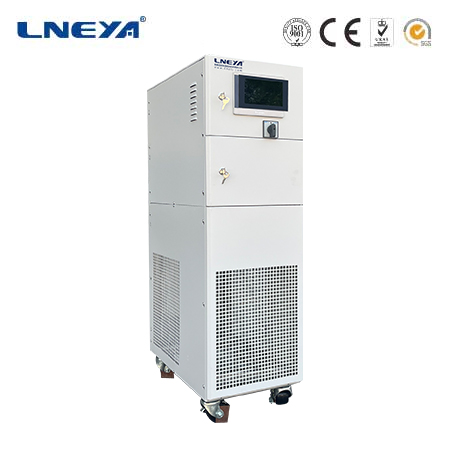
Circulating Water Baths: Circulating water baths are equipped with a pump that circulates the water within the bath and, in some cases, can also circulate water to an external device. The continuous circulation of water helps to improve temperature uniformity not only within the bath but also in any external equipment connected to it. This type of water bath is often used in applications where precise temperature control is required over a larger area or in multiple connected systems, such as in some chromatography setups or when heating multiple samples simultaneously in external vessels.
Applications of Water Baths in the Laboratory
Chemical Reactions:
Organic Synthesis: In organic chemistry, many reactions are highly sensitive to temperature. Water baths provide a gentle and controlled heat source, preventing over – heating and potential side reactions. For instance, reactions like esterification, where an alcohol and a carboxylic acid react to form an ester, often require a specific temperature range. By immersing the reaction flask in a water bath, chemists can ensure that the reaction proceeds at the desired rate and yields the correct product.
Inorganic Reactions: Similar to organic reactions, inorganic reactions also benefit from the use of water baths. Precipitation reactions, where two solutions react to form an insoluble solid, can be carried out more effectively with temperature control provided by a water bath. The controlled temperature helps in controlling the rate of precipitation and the size and shape of the formed crystals, which are important factors in determining the properties of the resulting inorganic compounds.
Biological Assays:
Enzyme – Catalyzed Reactions: Enzymes are biological catalysts that are highly temperature – sensitive. Each enzyme has an optimal temperature at which it functions most efficiently. Water baths are used to incubate samples containing enzymes at the appropriate temperature, ensuring that the enzymatic reactions occur as expected. For example, in a DNA polymerase chain reaction (PCR), a series of temperature – dependent steps are involved in amplifying DNA. A thermal cycler, which is essentially a specialized type of water bath with rapid temperature – changing capabilities, is used to precisely control the temperature for each step of the PCR process, including denaturation, annealing, and extension of DNA strands.
Cell Culture: In cell biology, maintaining the right temperature is crucial for cell growth and survival. Water baths are used to warm up culture media, trypsin solutions for cell detachment, and other reagents to the physiological temperature of the cells (usually around 37°C for mammalian cells). Shaking water baths, as mentioned earlier, also play a vital role in cell culture by providing gentle agitation to ensure uniform distribution of nutrients and oxygen to the cells.
Material Testing:
Thermal Expansion Studies: To determine the thermal expansion coefficient of a material, it is heated at a constant rate in a water bath. By precisely controlling the temperature and measuring the change in the dimensions of the material over time, scientists can calculate how the material expands or contracts with temperature changes. This information is essential for designing materials for various applications, such as in construction, aerospace, and electronics.
Material Stability Testing: Materials may be exposed to different temperatures in a water bath over extended periods to assess their stability and durability. For example, polymers can be tested in a water bath to see how they degrade or change properties when exposed to heat and moisture. This helps in understanding the lifespan and performance of materials under different environmental conditions.
Operation, Maintenance, and Safety
Operation: When using a water bath, it is important to fill it with the appropriate amount of water, usually up to the recommended level indicated by the manufacturer. Samples should be placed in suitable containers, such as test tubes or flasks, and carefully immersed in the water. For constant – temperature water baths, the desired temperature should be set accurately, and it is advisable to wait for the bath to reach and stabilize at the set temperature before adding the samples. In the case of shaking water baths, the shaking speed and amplitude should also be adjusted according to the requirements of the experiment.
Maintenance: Regular maintenance of water baths is essential to ensure their proper functioning. The water in the bath should be changed regularly to prevent the growth of microorganisms, the accumulation of contaminants, and the formation of scale. The bath should also be cleaned periodically using a mild detergent to remove any deposits or residues. The heating element, temperature sensor, and other components should be inspected regularly for signs of wear or damage, and any faulty parts should be replaced promptly.
Safety Considerations: Safety is of utmost importance when using water baths in the laboratory. Since water and electricity are involved, there is a risk of electric shock. To minimize this risk, water baths should be plugged into properly grounded electrical outlets, and any electrical components should be kept dry. Overheating can also be a hazard, so it is important to ensure that the temperature controller is functioning correctly and that the bath does not exceed the maximum recommended temperature. Additionally, caution should be exercised when handling hot samples or when adding or removing samples from the bath to avoid burns.
In conclusion, the water bath is an essential and versatile piece of equipment in the laboratory. Its ability to provide controlled heating, maintain stable temperatures, and facilitate various experimental processes makes it indispensable in a wide range of scientific disciplines. By understanding the different types of water baths, their applications, and the proper procedures for operation, maintenance, and safety, laboratory personnel can effectively utilize this valuable tool to conduct accurate and reliable experiments, contributing to the advancement of scientific knowledge.

Water Chiller Refrigeration Systems: Ensuring Precise Temperature Control Water chiller refrigeration systems are engineered to offer reliable and efficient cooling solutions for a wide array o...
View details
What are the steps for stopping a small water chiller? Stop the small chiller and enter normal shutdown, emergency shutdown, automatic shutdown, and long-term shutdown stop modes. ...
View details
Climatic Chamber Test: A Comprehensive Overview Climatic chamber tests play a pivotal role in modern engineering, manufacturing, and research. These tests provide valuable insights into how pr...
View detailsA flow through chiller, also known as a recirculating flow chiller, is a dynamic cooling system designed to continuously circulate a chilled fluid through a connected piece of equipment, absorbing...
View details

HelloPlease log in