 LNEYA Thermal Test Chillers

SEARCH WHAT YOU WANT
Enter keyword or product model
Search allProduct
SEARCH
Gas Cooling Chiller
Water Chillers: An In-Depth Analysis
Introduction to Water Chillers
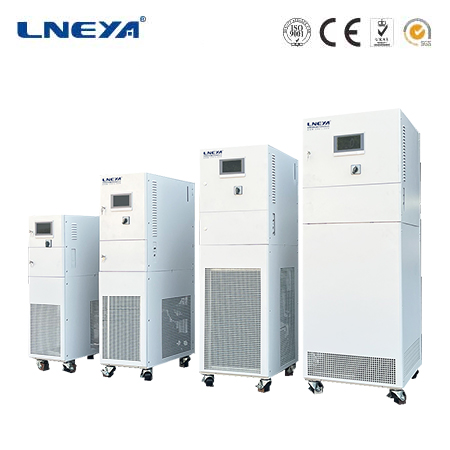
Water chillers, also known as chilled water systems, are integral to heating, ventilating, air conditioning, and refrigeration (HVACR) systems in larger and more complex applications. They operate on the principle of transferring heat from one medium to another, typically using water as the heat transport fluid.
Working Principles of Water Chillers
Water chiller systems consist of two main loops: the refrigeration loop and the chilled water loop. The refrigeration loop is responsible for cooling, while the chilled water loop distributes cold water to various consumer units. The refrigeration loop operates based on the vapor compression cycle, which involves the phase change of a refrigerant between liquid and gas states, facilitated by heat exchangers, compressors, and expansion valves.
Types of Water Chillers
There are two primary types of water chillers:
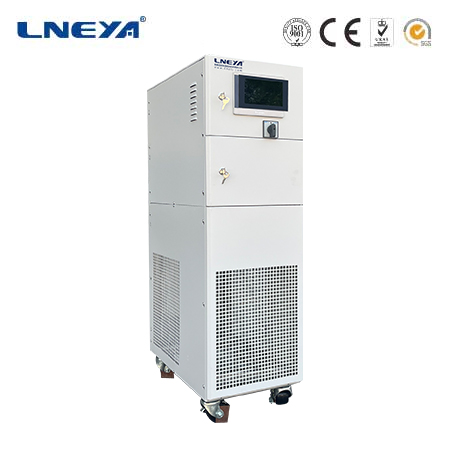
Air-Cooled Chillers: These use ambient air to remove heat from the refrigerant in the condenser. They are simpler in design, require less maintenance, and can be installed on rooftops without the need for additional space or mechanical rooms. However, they may have a shorter service life due to exposure to the elements and can be noisier than water-cooled chillers.
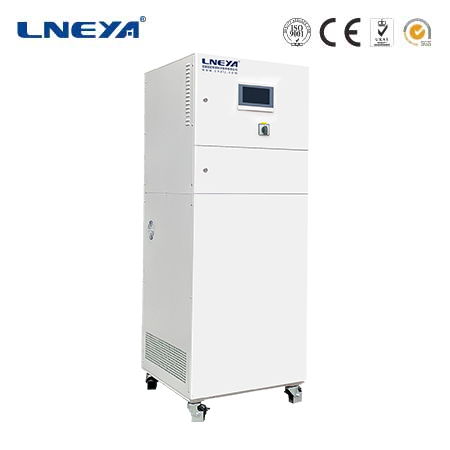
Water-Cooled Chillers: These chillers use water from an external cooling tower to dissipate heat from the gaseous refrigerant in the condenser. They are more efficient, especially for larger cooling loads, and generally last longer due to being protected from the elements. However, they require more space, have higher installation and maintenance costs, and may need a constant clean water supply.
Applications of Water Chillers
Water chillers are used in a variety of applications, including:
Food Processing: Maintaining optimal temperatures for food safety and quality.
Metal Processing: Cooling processes such as electroplating and metal forming.
Injection Moulding: Controlling temperatures for efficient plastic or metal part production.
Room Cooling: Providing comfortable indoor environments in commercial and industrial settings.
Safety Features of Water Chillers
Safety in water chiller systems includes features such as:
Overheat Protection: Automatically shutting down the system if it reaches a certain temperature to prevent damage.
Pressure Relief Valves: Releasing pressure if it becomes too high within the system.
Leak Detection: Identifying and alerting users to any refrigerant leaks, which can be hazardous.
Market Trends in Water Chillers
The global water chillers market is experiencing growth due to increasing demand in various industries. Trends indicate a move towards more energy-efficient and environmentally friendly chillers, with a focus on low global warming potential (GWP) refrigerants and advanced compressor technologies.
Environmental Impact of Water Chillers
The environmental impact of water chillers is influenced by the refrigerants used and the energy consumed during operation. There is a growing emphasis on reducing the use of high-GWP refrigerants and improving energy efficiency to minimize the carbon footprint of chiller systems.
Energy Efficiency of Water Chillers
Energy efficiency in water chillers is crucial for reducing operational costs and environmental impact. High-efficiency technologies, such as new compressor technology, high-efficiency heat exchangers, and the use of low-GWP refrigerants, contribute to better energy performance.
Conclusion
Water chillers play a vital role in temperature control across various industries. Understanding their principles, types, applications, and the latest market trends is essential for selecting the most suitable and sustainable cooling solutions. As the market continues to evolve, the focus on energy efficiency and environmental sustainability will remain a priority in the development and deployment of water chiller systems.

Understanding Thermal Oil Heaters Thermal oil heaters are a type of heat transfer fluid electric boiler designed to heat process fluids in industrial applications. They operate by using electri...
View details
Understanding 2000-Ton ChillersA 2000-ton chiller is an industrial-scale cooling system that provides significant cooling capacity for large buildings or complexes. These chillers are designed to ...
View details3 Ton Water Chiller: A Detailed IntroductionA 3 - ton water chiller is a device designed to remove heat from water, providing a continuous supply of chilled water for various applications. The "3 ...
View details
What are the common solutions to high pressure faults in liquid chiller? Due to insufficient cooling water output, the rated water output cannot be reached. The specific manifestation i...
View details

HelloPlease log in