 LNEYA Thermal Test Chillers

SEARCH WHAT YOU WANT
Enter keyword or product model
Search allProduct
SEARCH
Gas Cooling Chiller
Cooling Medium and Heat Dissipation
Water Cooled Chillers: Use water as the cooling medium to dissipate heat from the refrigerant. The refrigerant releases heat to water in the condenser, and this water is then pumped to a cooling tower, where heat is transferred to the ambient air. This indirect heat dissipation relies on a continuous water loop between the chiller and the cooling tower.
Air Cooled Chillers: Utilize ambient air directly to cool the refrigerant. The condenser, equipped with fins and fans, transfers heat from the refrigerant to the air blown over the condenser coils by fans. This direct heat exchange eliminates the need for a separate water system.
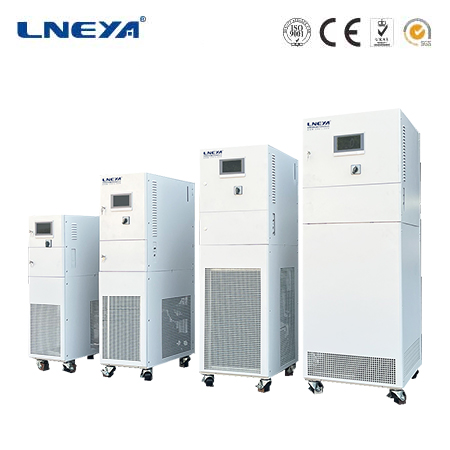
Component Differences
Water Cooled Chillers: Include a water-cooled condenser (often shell-and-tube or plate-type), compressor, evaporator, expansion valve, and require auxiliary components like a cooling tower, water pumps, and piping for water circulation. The cooling tower is a critical external component, adding complexity to the system.
Air Cooled Chillers: Comprise an air-cooled condenser (with fins and fans), compressor, evaporator, expansion valve, and a chilled water pump. They have no need for a cooling tower or additional water-related components, resulting in a more compact, self-contained design.
Energy Efficiency
Water Cooled Chillers: Generally offer higher energy efficiency, especially in large-scale applications or moderate to high ambient temperatures. Water’s higher heat capacity and thermal conductivity enable more efficient heat transfer in the condenser, reducing the compressor’s workload. Their coefficient of performance (COP) is typically 3.5–6, depending on size and conditions.
Air Cooled Chillers: Have lower efficiency compared to water cooled models, with a COP of 2.5–4. Ambient air temperature significantly impacts performance; efficiency drops in hot weather as the temperature difference between the refrigerant and air decreases, forcing the compressor to work harder.
Installation Requirements
Water Cooled Chillers: Require more complex installation due to the need for a cooling tower, water piping, and pumps. They need dedicated space for the cooling tower (often on rooftops or outdoors) and proper alignment of all water loop components. Installation time and labor costs are generally higher.
Air Cooled Chillers: Are easier and quicker to install. They only need connection to the process fluid loop and electrical supply, with no need for water piping or a cooling tower. They are suitable for spaces with limited area, as they can be placed outdoors or in compact mechanical rooms.
Maintenance Needs
Water Cooled Chillers: Demand more maintenance due to their complex water systems. The cooling tower requires regular cleaning to prevent algae, scale, and corrosion; water chemistry must be monitored to avoid condenser tube fouling. The chiller itself needs periodic checks of the compressor, condenser, and water pumps.
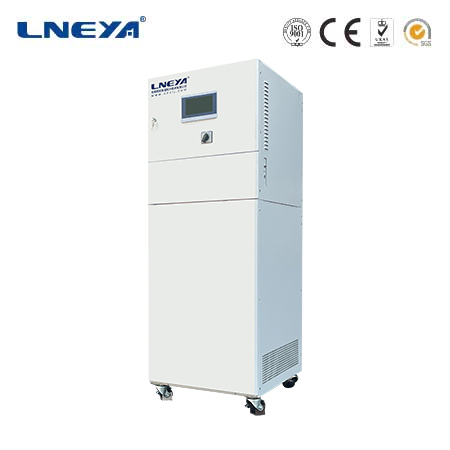
Air Cooled Chillers: Have simpler maintenance. Key tasks include cleaning condenser coils to remove dirt and debris (which hinder heat transfer) and inspecting fan motors and belts. There is no need for water treatment or cooling tower upkeep, reducing ongoing maintenance efforts.
Noise Levels
Water Cooled Chillers: Operate more quietly because they lack the loud condenser fans found in air cooled models. The main noise sources are the compressor and water pumps, which can be mitigated with sound insulation. This makes them suitable for noise-sensitive environments like hospitals or offices.
Air Cooled Chillers: Are noisier due to the fans used to blow air over the condenser coils. Fan noise can be significant, especially in larger units, making them less ideal for areas close to occupied spaces unless additional soundproofing is installed.
Applications
Water Cooled Chillers: Excel in large-scale industrial and commercial applications, such as data centers, manufacturing plants, large office complexes, and hospitals. They are preferred when high cooling capacity, energy efficiency, and low noise are priorities, and space is available for a cooling tower.
Air Cooled Chillers: Are suitable for small to medium-sized applications, including small offices, retail stores, restaurants, and light industrial processes. They are ideal when space is limited, water access is restricted, or quick installation is needed, and moderate noise levels are acceptable.
Cost Considerations
Initial Cost: Water cooled chillers have higher upfront costs due to the cooling tower, pumps, and piping. Air cooled chillers are cheaper to purchase and install, making them more cost-effective for budget-constrained projects.
Operating Cost: Water cooled chillers generally have lower operating costs due to higher efficiency, especially for large cooling loads over long periods. Air cooled chillers may have higher energy bills, particularly in hot climates, but lower maintenance costs can offset this to some extent.
Lifecycle Cost: For large, long-term applications, water cooled chillers often have lower lifecycle costs due to energy savings. Air cooled chillers may be more economical for small, short-term uses or in regions with mild climates.
In conclusion, the choice between water cooled and air cooled chillers depends on factors like cooling capacity, space availability, water access, noise restrictions, and budget. Water cooled models offer efficiency and low noise for large-scale needs, while air cooled units provide simplicity and cost savings for smaller applications. Understanding these differences is key to selecting the optimal cooling solution.

Laboratory Chillers: Precision Temperature Control for Scientific Applications Laboratory chillers are essential equipment in scientific laboratories, used to maintain precise temperature contr...
View details
Introduction to Water Recirculation CoolersWater recirculation coolers are essential in maintaining a stable temperature in various industrial and laboratory processes. These systems work by circu...
View details
A 10kw chiller is a significant piece of cooling equipment that offers a cooling capacity of 10 kilowatts. This type of chiller is designed to meet the cooling needs of a wide range of application...
View details
Cool water chillers are crucial for applications where temperature control is necessary, such as in chemical processes, laser machines, and HVAC systems. Chillers can be air-cooled or water-cooled...
View details

HelloPlease log in