 LNEYA Thermal Test Chillers

SEARCH WHAT YOU WANT
Enter keyword or product model
Search allProduct
SEARCH
Gas Cooling Chiller
An air cooled chiller plant is a self-contained cooling system designed to generate chilled water by removing heat from the water and transferring it to the surrounding air. Unlike water-cooled chiller plants that rely on cooling towers, air cooled systems use fans to blow ambient air over condenser coils, making them a more straightforward and space-efficient solution for many industrial, commercial, and institutional applications.
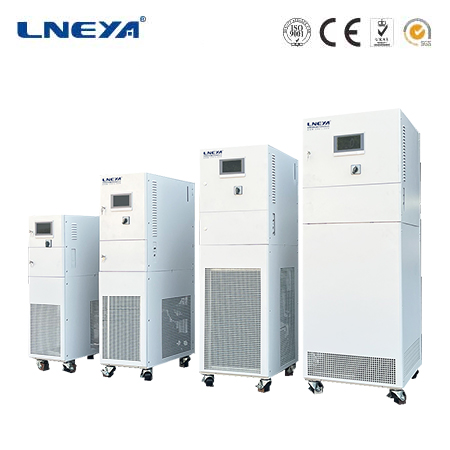
The working principle of an air cooled chiller plant is based on the vapor-compression refrigeration cycle, adapted to use air as the heat rejection medium. The cycle consists of four main stages: evaporation, compression, condensation, and expansion, each facilitated by key components working in sequence.
The evaporation stage occurs in the evaporator, a heat exchanger where the water to be cooled (chilled water) comes into contact with a low-pressure, low-temperature liquid refrigerant. Heat from the chilled water is transferred to the refrigerant, causing the refrigerant to vaporize into a low-pressure gas. The now-cooled water exits the evaporator and is pumped through a distribution network to the areas or equipment needing cooling, where it absorbs heat before returning to the evaporator to repeat the cycle.
The low-pressure refrigerant gas is drawn into the compressor, which increases the gas’s pressure and temperature. This high-pressure, high-temperature gas is necessary for efficient heat transfer in the next stage, as it must be hotter than the ambient air to release heat.
From the compressor, the high-pressure refrigerant gas flows into the air cooled condenser. The condenser consists of a coil system with fins to increase surface area, and fans that force ambient air over the coils. Heat from the refrigerant is transferred to the air, which is then expelled into the atmosphere. As the refrigerant releases heat, it condenses back into a high-pressure liquid.
The high-pressure liquid refrigerant then passes through the expansion valve, which restricts its flow, reducing pressure and temperature. This converts the refrigerant into a low-pressure, low-temperature mixture of liquid and vapor, which re-enters the evaporator to absorb more heat, completing the cycle.
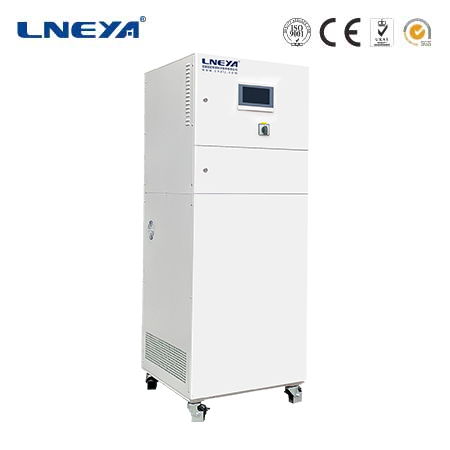
Key components of an air cooled chiller plant work together to ensure reliable operation. The evaporator, typically a shell-and-tube or plate heat exchanger, is where heat transfer between the chilled water and refrigerant occurs. Shell-and-tube evaporators are common in larger plants, with chilled water flowing through the shell and refrigerant through the tubes, while plate evaporators, with their compact design, are efficient for smaller systems.
The compressor is the core of the system, available in types such as reciprocating, scroll, screw, or centrifugal. Reciprocating compressors use pistons and are suitable for medium-capacity applications. Scroll compressors, with interlocking spiral components, offer high efficiency and quiet operation, making them ideal for commercial and light industrial use. Screw compressors handle larger capacities and provide good part-load efficiency, while centrifugal compressors are used in large-scale plants requiring high cooling capacity.
The air cooled condenser is a critical component, consisting of coils (usually copper or aluminum) and fins (to enhance heat transfer) surrounded by fans. The number and size of fans depend on the condenser’s heat rejection requirements; larger plants may use multiple fans with variable speed controls to adjust airflow based on cooling demand.
Chilled water pumps circulate the cooled water from the evaporator to the cooling load and back. These pumps ensure a consistent flow rate, which is essential for maintaining stable temperatures. In larger plants, variable speed pumps are used to match flow rates to cooling demand, reducing energy consumption.
Control systems regulate the plant’s operation, using sensors to monitor chilled water temperature (supply and return), refrigerant pressure, and ambient air temperature. Controllers adjust compressor output, fan speed, and pump flow to maintain the desired chilled water temperature and optimize efficiency. Advanced systems may include building management system (BMS) integration, allowing for remote monitoring and control.
Air cooled chiller plants offer several advantages compared to water-cooled systems. Their simplicity is a primary benefit—they eliminate the need for cooling towers, condenser water pumps, and water treatment systems, reducing installation complexity and upfront costs. This makes them easier to install, especially in locations with limited space or where water access is restricted.
Lower maintenance requirements are another advantage. Without cooling towers, there is no need for water treatment to prevent scaling, corrosion, or biological growth (such as Legionella), reducing ongoing maintenance tasks and costs. Air cooled plants also have a smaller footprint, as they do not require space for cooling towers or associated piping, making them suitable for rooftops, compact mechanical rooms, or urban areas with space constraints.
Flexibility in installation is another key feature. Air cooled chiller plants can be installed outdoors or indoors with proper ventilation, and their modular design allows for easy expansion by adding additional chillers to meet increased cooling demand.
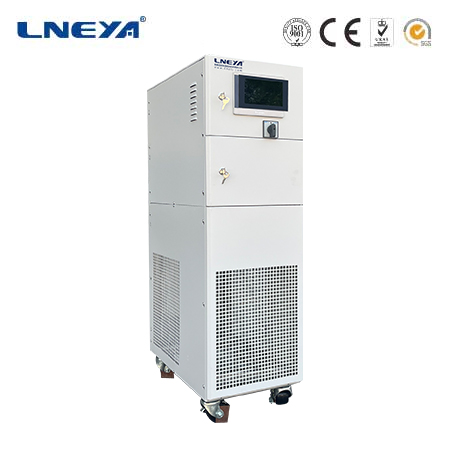
However, air cooled chiller plants have limitations. Their efficiency is more sensitive to ambient air temperature; as temperatures rise (e.g., in hot climates), the temperature difference between the refrigerant and air decreases, reducing heat transfer efficiency and increasing compressor workload. This can lead to higher energy consumption compared to water-cooled plants in high-temperature environments.
Noise levels may be a concern, as the condenser fans generate sound. This can be an issue in residential areas or noise-sensitive environments, though modern plants often include sound-dampening features to mitigate this.
Air cooled chiller plants find applications in various sectors. Commercial buildings, such as office towers, hotels, and shopping malls, use them to cool air handling units and maintain comfortable indoor temperatures. They are ideal for these settings due to their compact size and lower maintenance needs.
Industrial applications include cooling of small to medium-sized manufacturing processes, such as plastic injection molding machines, packaging equipment, and laboratory testing facilities. Their simplicity makes them suitable for industrial settings where water availability is limited or cooling tower installation is impractical.
Healthcare facilities, such as clinics and small hospitals, use air cooled chiller plants to cool medical equipment, operating rooms, and patient areas. They offer reliable cooling with minimal maintenance, ensuring uninterrupted operation critical for healthcare services.
Data centers with moderate cooling requirements utilize these plants to cool server rooms, especially in smaller facilities where water-cooled systems are not feasible. Their ability to be installed outdoors saves valuable indoor space for IT equipment.
Educational institutions, such as schools and universities, use air cooled chiller plants to cool classrooms, lecture halls, and administrative buildings, benefiting from their ease of installation and lower upfront costs.
When selecting an air cooled chiller plant, several factors must be considered. Cooling capacity, measured in tons or kilowatts (kW), must match the heat load of the application. Heat load calculation considers factors such as the volume of the space, heat generated by equipment and occupants, and solar heat gain.
Energy efficiency, indicated by the coefficient of performance (COP) or integrated part-load value (IPLV), is crucial for minimizing operating costs. Higher COP/IPLV values indicate better efficiency. Variable speed compressors and fans improve part-load efficiency by adjusting output to match cooling demand, which is important since most plants operate at part load most of the time.
Ambient temperature range is a key consideration, as the plant’s performance depends on the air temperature it uses for heat rejection. Plants should be sized to operate efficiently within the maximum expected ambient temperature of the location.
Noise levels, measured in decibels (dB), should be evaluated for noise-sensitive environments. Manufacturers provide noise ratings, and options such as low-noise fans or acoustic enclosures can reduce sound output.
Refrigerant type affects environmental compliance and efficiency. Modern air cooled chiller plants use low-global-warming-potential (GWP) refrigerants, such as R-134a, R-454B, or hydrofluoroolefins (HFOs), to meet environmental regulations.
Material durability is important for longevity, especially in harsh environments. Condenser coils should be made of corrosion-resistant materials, such as copper with aluminum fins or coated coils, to withstand outdoor conditions, including humidity, salt air (in coastal areas), and pollutants.
Maintenance of an air cooled chiller plant is essential to ensure efficiency and longevity. Regular cleaning of the condenser coils is critical to remove dirt, dust, leaves, and debris, which can block airflow and reduce heat transfer. This can be done using compressed air, a soft brush, or low-pressure water washing.
Inspecting and cleaning fans and fan motors ensures proper airflow. Fan blades should be checked for balance and damage, and motors should be lubricated according to manufacturer recommendations.
Checking refrigerant levels and pressures is necessary to detect leaks, which can reduce cooling capacity and harm the environment. Leaks should be repaired promptly, and refrigerant should be recharged to the manufacturer’s specified levels.
Monitoring and maintaining the control system ensures accurate operation. Sensors should be calibrated regularly to provide precise temperature readings, and controllers should be checked for proper functioning, including adjustment of compressor and fan operation based on cooling demand.
Chilled water pumps require regular inspection for leaks, proper alignment, and lubrication. Filters in the chilled water loop should be replaced periodically to prevent debris from entering the evaporator and reducing efficiency.
In conclusion, air cooled chiller plants are versatile, cost-effective cooling solutions suitable for a wide range of applications. Their simplicity, lower maintenance needs, and space efficiency make them a popular choice, especially in commercial and light industrial settings. While they are sensitive to ambient temperature and may have higher energy consumption in hot climates, their advantages often outweigh these limitations for many users. Understanding their working principles, components, applications, and maintenance requirements is essential for selecting and operating an air cooled chiller plant effectively.

The Refrigeration Cycle: Core Working ProcessThe working of an air cooled chiller is centered on the refrigeration cycle, which consists of four sequential stages, each facilitated by key compone...
View details
Temperature chambers, often referred to as thermal chambers, are specialized enclosures designed to create controlled thermal environments. These chambers enable precise temperature simulations ra...
View detailsWater Chiller Refrigeration Systems: Ensuring Precise Temperature Control Water chiller refrigeration systems are engineered to offer reliable and efficient cooling solutions for a wide array o...
View details
IntroductionChillers play a vital role in the heating, ventilation, air - conditioning, and refrigeration (HVACR) systems across the United States. From maintaining comfortable indoor environment...
View details

HelloPlease log in