 LNEYA Thermal Test Chillers

SEARCH WHAT YOU WANT
Enter keyword or product model
Search allProduct
SEARCH
Gas Cooling Chiller
Circulating Bath Chillers: Consistent Temperature Control for Laboratories
Introduction
Circulating bath chillers are essential in laboratory settings for their ability to provide precise temperature control across a range of applications, from chemical reactions to analytical testing. These chillers circulate a temperature-controlled fluid through a closed loop to maintain a consistent environment.
Design and Functionality
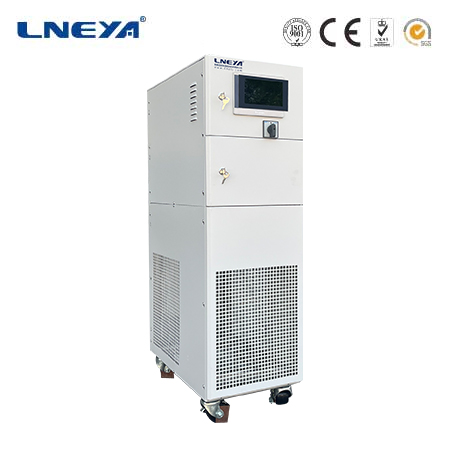
Circulating bath chillers consist of a temperature-controlled bath and a recirculating pump. The bath contains the fluid, typically a mixture of water and glycol or another suitable fluid, which is cooled or heated by the chiller’s internal mechanism. The pump then circulates this fluid through external applications via tubing.
Applications
These chillers are used in numerous applications, including:
Chemical Reactions: Maintaining precise temperatures for exothermic or endothermic reactions.
Analytical Instruments: Keeping instruments like HPLC and spectrophotometers at optimal temperatures.
Bioreactors: Controlling the temperature for biological cultures and fermentation processes.
Efficiency Factors
The efficiency of a circulating bath chiller is influenced by:
Fluid Type: The choice of fluid can affect the heat transfer rate and the chiller’s energy consumption.
System Insulation: Well-insulated tubing and baths reduce heat loss, improving efficiency.
Control System: Advanced control systems can optimize the chiller’s operation, reducing energy use.
Maintenance
Proper maintenance is crucial for the chiller’s performance and longevity:
Cleaning: Regularly cleaning the bath and tubing prevents contamination and ensures efficient heat transfer.
Inspecting: Periodic inspections help identify potential issues such as leaks or worn components.
Fluid Management: Regularly testing the fluid for contaminants and replacing it as necessary to maintain heat transfer properties.
Optimization Strategies
To optimize the performance of a circulating bath chiller, consider:
Proper Sizing: Ensure the chiller is appropriately sized for the heat load to avoid inefficiencies.
Regular Servicing: Schedule regular servicing to keep the unit operating at peak efficiency.
Energy Management: Implement energy management practices, such as variable speed drives on pumps, to reduce energy consumption.
Conclusion
Circulating bath chillers are indispensable for maintaining consistent temperatures in laboratory and industrial processes. By understanding their design, applications, and maintenance requirements, users can ensure efficient and reliable temperature control. Regular maintenance and proper sizing contribute to the longevity and optimal efficiency of these chillers.

Cold Water Chillers: Efficient Cooling for Diverse Industries Cold water chillers are vital components in temperature control systems, used across a variety of industries for cooling processes,...
View details
Small Industrial Water Chillers: Efficient Cooling for Manufacturing Processes Small industrial water chillers play a critical role in maintaining precise temperature control in a variety of ma...
View detailsIntroduction to Large Environmental Chambers Large environmental chambers are engineered to simulate various environmental conditions for testing the performance, reliability, and durability of...
View details
What are the factors that affect the evaporation temperature of lab water chiller? The factors that affect the evaporation temperature of laboratory chillers include the following: oil ...
View details

HelloPlease log in